Key Takeaways
- Medicare is federal insurance mainly for people 65+ and some younger people with disabilities.
- Medicaid helps eligible people with limited income; benefits vary by state.
- You can have both. Dual eligibility may lower premiums and other medical costs.
- Home care differs. Medicare covers skilled home health; Medicaid may cover ongoing personal care.
- 2026 Part B costs: $202.90 monthly standard premium; $283 annual deductible.
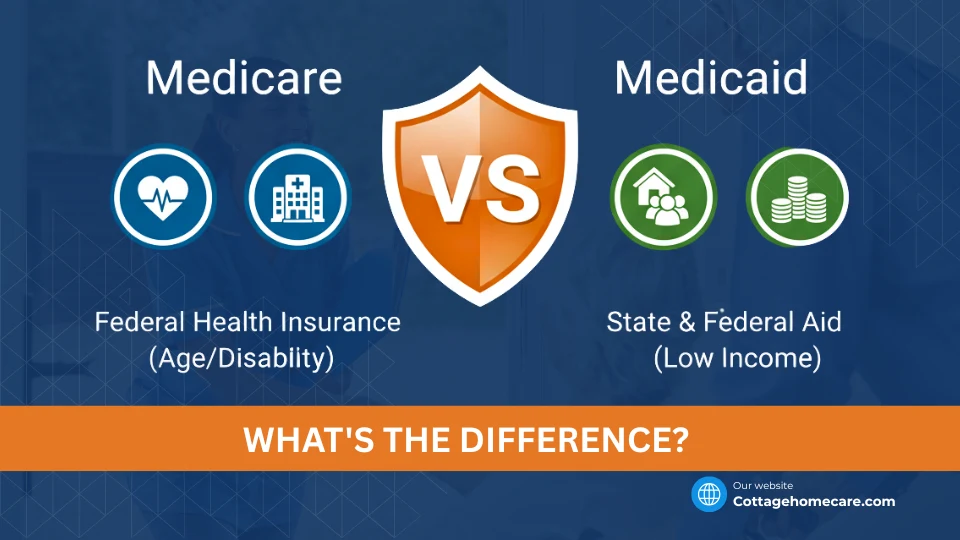
What is the difference between Medicare and Medicaid? Medicare is mainly based on age or a qualifying disability. Medicaid is based on financial need and other state rules. Both help pay for health care, but they do not cover the same services, and you may qualify for both.
If you are caring for a parent, the most useful question may be who will pay for doctor visits, prescription drugs, or help with bathing and dressing at home. This 2026 guide explains those differences first, then shows how to check coverage and apply.
In This Guide
Medicare vs Medicaid: The Main Differences
Quick answer: Medicare is based mainly on age or qualifying disability; Medicaid is tied to financial need and state eligibility rules. One is not automatically better. The right coverage depends on your health needs, income, and where you live.
| Feature | Medicare | Medicaid |
|---|
| Who qualifies? | People 65+ and some younger people with qualifying disabilities or conditions | Eligible children, adults, families, older adults, and people with disabilities, under state rules |
|---|
| Who runs it? | Federal Medicare program; private insurers offer Medicare Advantage and Part D plans | Federal and state governments, with state-run eligibility and benefits |
|---|
| Typical costs | Premiums, deductibles, and cost sharing; some people get help paying | Usually low or no cost for covered care; certain programs may require cost sharing |
|---|
| Doctor and hospital care | Yes, when covered by your Medicare plan | Yes, under the state Medicaid program |
|---|
| Long-term personal care | Original Medicare does not pay for custodial care when it is the only care needed | May pay for qualifying long-term services, including home and community care |
|---|
| Can I use both? | Yes, if eligible for both | Yes; Medicaid may help pay Medicare costs |
|---|
| When can I apply? | Specific enrollment periods; some people enroll automatically | Applications generally accepted throughout the year |
|---|
The chart gives the basic picture. If a family member needs long-term help at home, jump to the home care section. If costs are the concern, the 2026 cost figures below may help you plan.
Who Qualifies for Medicare?
Most people become eligible for Medicare at age 65. Some people qualify sooner because of a disability or a medical condition. Medicare eligibility is not based on having a low income.
- Age 65 or older: Most people become eligible around their 65th birthday, subject to the program’s other enrollment rules.
- Qualifying disability: Many people get Medicare after receiving Social Security Disability Insurance (SSDI) for 24 months.
- Certain conditions: People with amyotrophic lateral sclerosis (ALS) or end-stage renal disease (ESRD) may qualify under special rules.
Original Medicare has two main parts: Part A for hospital-related services and Part B for outpatient medical care. Private Medicare Advantage plans are another way to get Part A and Part B benefits. Part D helps with prescription drugs.
If you or your parent is close to age 65, check enrollment dates early. Waiting too long to enroll in Part B can cause a coverage gap or a lasting late-enrollment penalty when no exception applies.
Who Qualifies for Medicaid?
Medicaid can cover people of many ages, including children, pregnant women, adults with low income, older adults, and people with disabilities. Your state makes the final eligibility decision using rules for your coverage group.
- Income: Most children and many adults are checked using household income under Modified Adjusted Gross Income (MAGI) rules.
- Savings and resources: Most MAGI Medicaid groups do not have an asset test. Medicaid based on age, blindness, disability, or long-term care can use different financial rules.
- Health and care needs: Extra assessments may apply when you request nursing home care or long-term services at home.
- Where you live: Income limits, covered services, and some enrollment steps differ by state.
Some states also offer a “spend-down” path for people who have high medical costs but exceed the usual income threshold. Ask your state Medicaid office if that option applies.
2026–2027 update: Starting in 2027, new community-engagement rules will affect certain Medicaid expansion adults ages 19–64, with exclusions and exceptions. They do not apply to people enrolled in or entitled to Medicare. Check your state notice before assuming the rule applies to you.
What Does Medicare vs Medicaid Cover?
Both programs help pay for medical care. Their biggest differences appear when you compare long-term support, costs, and coverage rules.
What Medicare covers
- Part A: Covered inpatient hospital care, some skilled nursing facility care, hospice, and certain home health services.
- Part B: Doctor visits, outpatient services, preventive care, medical equipment, and qualifying home health services.
- Part C: Medicare Advantage plans offered by private insurers. They must cover Medicare Part A and B benefits and may include extra benefits.
- Part D: Prescription drug coverage through approved private plans.
What Medicaid covers
Medicaid covers medical services required under federal rules and may cover additional benefits chosen by your state. Covered care can include doctor visits, hospital care, nursing facility services, personal care, and home and community-based services. Eligibility and prior approval still matter.
Original Medicare does not pay for long-term personal care when that is the only help needed. Medicaid is more likely to offer that support for eligible people, but having a Medicaid card does not automatically mean every home care service is approved.
Medicare vs Medicaid Costs in 2026
Quick answer: For 2026, the standard Medicare Part B premium is $202.90 per month, and the Part B annual deductible is $283. Most people pay no monthly premium for Part A. Medicaid usually has little or no cost for covered services, but some programs require cost sharing.
- Part A monthly premium: $0 for most eligible people with enough Medicare-covered work history; others may pay $311 or $565 per month in 2026.
- Part A inpatient hospital deductible: $1,736 per benefit period in 2026.
- Part B standard premium: $202.90 per month in 2026. People with higher incomes may pay more.
- Part B annual deductible: $283 in 2026, before Original Medicare starts paying for many Part B services.
- Medicaid out-of-pocket costs: Often $0 or a small copay for covered care. Costs for certain long-term care arrangements may be different.
These Medicare amounts are published by the federal government. See the current official 2026 Medicare cost table. Your total cost also depends on your specific plan and the care you use.
If your monthly Medicare premium is hard to afford, ask about a Medicare Savings Program. Some eligible people can get help with Part A or Part B costs, and certain people also qualify for Extra Help with prescriptions.
Can You Have Both Medicare and Medicaid?
Quick answer: Yes. People who meet the requirements for both are called “dual eligible.” Medicare generally pays first for services that Medicare covers. Medicaid can pay some remaining costs and may cover additional services, depending on the person’s level of Medicaid coverage.
Imagine your mother is 71 and has Medicare, but her income is limited. She may also qualify for Medicaid or a Medicare Savings Program. That could help with premiums, medical bills, or other benefits. Her state must review her income, resources when required, and eligibility group.
- Medical bills: Full-benefit Medicaid or a Medicare Savings Program may reduce certain Medicare premiums and cost sharing.
- Prescription drugs: Many people with Medicaid and Medicare automatically get Extra Help, which lowers covered Part D drug costs.
- Home care: Full-benefit Medicaid may offer additional help for daily activities if the person also meets the state’s long-term-care program rules.
You do not have to choose between the two if you qualify for both. Visit Medicare.gov’s Medicaid explanation or ask your state Medicaid office how the two programs work together.
Which Program Pays for Care at Home?
Quick answer: Medicare may cover home health care when you need qualifying part-time or intermittent skilled services and meet homebound and other requirements. Medicaid may cover ongoing help with personal care through eligible state programs. Neither type of coverage is automatic.
When Medicare can pay for home health care
Medicare home health benefits can cover skilled nursing, certain therapy, and part-time home health aide services for eligible people. A health care provider must order the care, and a Medicare-certified home health agency must deliver the services. A hospital stay is not a general requirement to qualify for home health care.
Medicare can sometimes cover help with bathing or dressing as part of an eligible home health plan, but it does not pay for ongoing personal care when that is the only help needed. Learn more from Medicare.gov’s home health coverage rules.
When Medicaid may pay for personal care
State Medicaid programs may offer home and community-based services (HCBS). Depending on the program, approved care can include help with bathing, dressing, mobility, meals, and other daily tasks. A needs assessment, covered service plan, and provider rules may apply.
Some state programs allow an eligible relative or trusted person to provide paid care, while others restrict which family members can be paid. A program must authorize the arrangement, and payment amounts are not the same nationwide.
If you already know your family needs hands-on help, our separate guide to home care insurance coverage explains what information to prepare. You can also ask Cottage which care options and next steps are available in your area.
Important distinction: Medicare does not normally pay for long-term custodial care, including help with bathing or dressing when that is the only care needed. Medicaid long-term care eligibility requires a separate review of financial and care needs.
People often choose a health plan based on more than hospital care. Here is where the two programs differ on other common services.
- Prescription drugs: Medicare drug coverage is generally provided through Part D. If you have both Medicare and Medicaid, your Medicare drug plan usually covers your prescriptions, and Extra Help may lower your costs.
- Dental care: Original Medicare usually does not cover routine dental cleanings or dentures. Medicare Advantage and some state Medicaid programs may offer more dental benefits.
- Vision care: Original Medicare generally does not cover routine eye exams for glasses. Some Medicare Advantage and Medicaid benefits may include vision services.
- Doctors and clinics: Check that your chosen provider accepts your exact Medicare or Medicaid plan. Provider networks and referral rules can differ, especially for private or managed-care plans.
Ask the plan for its current provider list and drug list before scheduling visits or filling a prescription. See Medicare’s Extra Help rules for official information about drug cost assistance.
When and How to Apply
Medicare enrollment
Your first Medicare enrollment period usually lasts seven months: the three months before you turn 65, your birthday month, and the three months after. Other enrollment periods may apply if you are still working or have qualifying coverage.
The General Enrollment Period for Part B runs January 1 through March 31. Medicare Advantage and Part D plan changes commonly use the October 15–December 7 annual period. These are different enrollment windows, so check which one you need.
You can start with Medicare’s official enrollment instructions and check when your coverage would start.
Medicaid enrollment
You can generally apply for Medicaid throughout the year through your state Medicaid agency. The office may ask about your income, household, address, and other factors. For older adults or long-term-care programs, it may also need information about assets and care needs.
If you have questions about Medicare plans or whether you can get help with Medicare costs, find free local SHIP counseling. SHIP provides independent Medicare counseling rather than selling a plan.
Documents worth preparing
- Your current Medicare or insurance cards, if you have them.
- Proof of income and recent coverage or benefits letters.
- Proof of identity, address, and other documents requested by the program.
- A short list of medical needs and help needed at home, such as bathing, dressing, or moving safely.
- Any notices about Medicaid renewal, Medicare enrollment, or coverage changes.
Which Program Fits Your Situation?
A single person may have different coverage needs than an older adult who needs daily care. Use these examples to decide which program to ask about first.
- You are turning 65: Review Medicare enrollment dates. If you have limited income, also ask your state about Medicaid or a Medicare Savings Program.
- Your parent already has Medicare and needs a home aide: Ask whether they meet Medicare’s skilled home health rules. For ongoing personal care, ask the state Medicaid office about long-term services and supports.
- You are younger than 65 with limited income: Check your state Medicaid eligibility category. Do not assume Medicare is available unless you meet a separate disability or condition rule.
- You have both coverage cards: Ask how your Medicare and Medicaid benefits work together and whether any extra assistance is available for premiums, medications, or care at home.
Cottage Home Care can discuss your family’s daily care needs, explain the types of in-home help to ask about, and identify intake information for available services. Coverage approval comes from the relevant program or insurer. If you need support with the next step, contact Cottage Home Care or call 516-367-2266.
Comparing insurance beyond these two programs? Read the separate Medicare vs Medicaid vs Obamacare guide for Marketplace coverage and three-way comparisons.
Frequently Asked Questions
What is the biggest difference between Medicare and Medicaid?+
Medicare is federal health insurance mainly for people age 65 and older or people with certain disabilities. Medicaid is a federal and state program for eligible people with limited income. Their costs, rules, and covered services differ.
Is Medicare better than Medicaid?+
Neither is always better. Medicare offers broad medical coverage to people who qualify by age or disability. Medicaid may cost less and can cover some long-term services that Medicare does not. You may qualify for both.
Can you have Medicare and Medicaid at the same time?+
Yes. That is called dual eligibility. Medicare generally pays first for Medicare-covered services, while Medicaid may help pay other eligible costs or benefits.
Who pays for long-term home care, Medicare or Medicaid?+
Medicaid may pay for qualifying long-term personal care through state programs. Medicare covers certain skilled home health services but generally does not cover long-term custodial care when that is the only care needed.
Does Medicare pay for a home health aide?+
Sometimes. Medicare can cover part-time or intermittent aide services when you also receive qualifying skilled home health care and meet the other requirements. You do not generally need a prior hospital stay.
Can Medicaid pay a family member to be a caregiver?+
Some state Medicaid programs permit certain family caregivers to be paid, but eligibility, worker restrictions, training, hours, and pay rules differ. Ask about the specific program before making plans.
How much is Medicare Part B in 2026?+
The standard Part B premium is $202.90 per month in 2026, and the annual Part B deductible is $283. Higher-income beneficiaries can pay a higher premium.
Does Medicaid have an asset test?+
Not for most income-based MAGI Medicaid groups. Older adults and people seeking disability-based or long-term-care Medicaid may face resource rules. Your state decides which rules apply to your category.
Does Medicaid pay for dental and vision care?+
Children have broad dental coverage rules under Medicaid. Adult dental and vision benefits vary by state. Medicare Advantage plans may also offer some dental or vision extras, depending on the plan.
Who pays for prescriptions if I have both Medicare and Medicaid?+
For most people with both, Medicare Part D is the primary source of drug coverage. Eligible people also get Extra Help with covered drug costs. Medicaid may cover certain drugs in limited cases.
Can I apply for Medicaid at any time?+
Yes. Medicaid applications are generally accepted throughout the year. Medicare has enrollment periods, and missing one can sometimes cause late penalties or a coverage gap.
Will Medicaid rules change in 2027?+
Certain Medicaid expansion adults ages 19–64 may have new community-engagement requirements starting in 2027 or earlier in some states. People enrolled in or entitled to Medicare are excluded from that requirement. Check your state guidance for details.
Official Sources and Further Reading
This guide was reviewed against government program information available in October 2026. For your exact eligibility or plan benefits, use the current official program information.

 Alex TullaoRegistered Nurse