Key Takeaways
- Medicare: Federal health insurance, mostly for people 65 and older or certain qualifying conditions.
- Medicaid: Low-cost coverage for eligible people; some state programs also pay for ongoing personal care at home.
- Obamacare / ACA: A law and Marketplace for private health plans, not a single government insurance program.
- Home care: The answer depends on whether the need is skilled medical care or help with everyday tasks.
- Both programs: Some people qualify for Medicare and Medicaid at the same time.
Medicare vs Medicaid vs Obamacare: What’s Different?
Medicare, Medicaid, and Obamacare do not mean the same thing. They have different rules for who qualifies, what you pay, and what services are covered. Medicare mainly serves older adults and people with certain disabilities. Medicaid helps eligible people with limited income. Obamacare is the law behind the Marketplace for private health insurance.
If a loved one needs a caregiver at home, the most useful question is whether the help is medical care or daily personal care. This guide compares the programs, gives verified 2026 costs, and explains the next steps for your family.
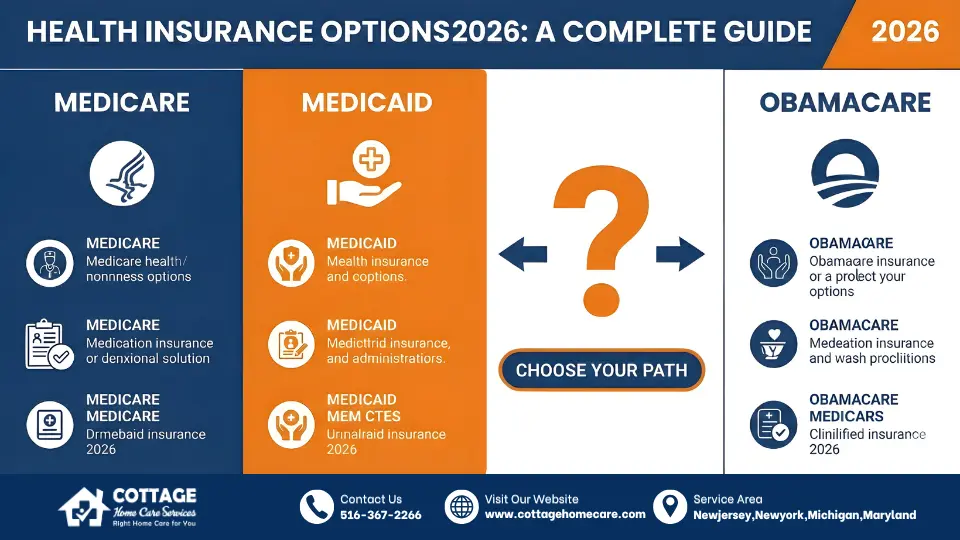
What Are Medicare, Medicaid, and Obamacare?Medicare is federal health insurance mainly for adults age 65 and older and some younger people with certain health conditions or disabilities. Original Medicare has hospital coverage (Part A) and medical coverage (Part B). People can also choose a Medicare Advantage plan instead of Original Medicare. Medicaid is a public health program run by states under federal rules. It helps eligible people with limited income, and sometimes limited resources, pay for care. Children, adults, older people, and people with disabilities may qualify under different rules. Obamacare is the common name for the Affordable Care Act (ACA). It is a law, not one government insurance plan. Its Health Insurance Marketplace offers private plans. Some shoppers qualify for tax credits that lower monthly premiums. Can someone have more than one? Yes. Some people qualify for both Medicare and Medicaid. They are often called dual eligible. A person does not have to choose just one of those two programs. Medicare vs Medicaid vs Obamacare: Quick ComparisonThe biggest difference is who each program serves. The chart below shows the main rules. A plan or state program may have extra details.
| Compare | Medicare | Medicaid | ACA Marketplace |
|---|
| What it is | Federal health insurance | Federal-and-state health coverage | Private insurance sold under ACA rules | | Main eligibility | Usually age 65+, or certain disabilities or conditions | Income, household or disability status, and state rules | Marketplace eligibility; financial help depends on income and other available coverage | | Typical cost | Premiums and cost-sharing vary by Medicare part and plan | Usually low cost; some programs require cost-sharing | Premiums, deductibles, and copays vary by plan and subsidy | | How to enroll | Certain Medicare enrollment periods | Apply year-round | Open Enrollment or eligible Special Enrollment Period | | Help at home | Certain skilled home health services when requirements are met | Some eligible people can receive long-term personal care at home | Plan-specific covered medical home health; not generally ongoing custodial care | Most important for home care: Medicaid is often the first program to ask about for ongoing help with bathing, dressing, and daily tasks. But you still need to meet your state’s financial and care-needs rules. Medicare and private plans can cover certain medical home health services instead. How Much Does Medicare Cost in 2026?For 2026, the standard Medicare Part B premium is $202.90 a month, and the Part B annual deductible is $283. Some people pay more for Part B because of income. Most people do not pay a monthly premium for Part A. If you have a covered inpatient hospital stay, the 2026 Part A deductible is $1,736 per benefit period. This hospital deductible is not a home-care fee. Part D drug plan costs and Medicare Advantage plan costs depend on the plan you choose. Compare the full cost, not just the monthly premium. Official source: CMS 2026 Medicare premiums and deductibles. Does Medicare Pay for a Caregiver at Home?Sometimes, but only under its home health rules. Medicare may cover part-time or intermittent skilled nursing and certain therapy services at home. If the person also receives qualifying skilled services, Medicare may cover limited aide visits for bathing, grooming, walking, or feeding. A covered person generally must be homebound, need qualifying skilled care, and have care ordered by a doctor or another allowed health professional. Care must come from a Medicare-certified home health agency. A prior hospital stay is not required for the regular Medicare home health benefit. Covered care can continue while the person still meets the rules. Medicare does not pay for 24-hour care, ordinary household help, or personal care when that is the only support needed. Example: Your father needs physical therapy and some help bathing after an illness. If he meets Medicare’s home health rules, those services may be covered as part of his care plan. If he needs only daily dressing and meal help, Medicare usually will not pay for those needs alone. Some Medicare Advantage (Part C) plans may also offer limited extra services for people with certain chronic conditions. These optional benefits may include forms of in-home support or meals. They are not included in every plan. Ask your plan what is covered, who qualifies, and how many visits or services are allowed. Check the official Medicare home health coverage rules and CMS rules for Medicare Advantage supplemental benefits. When Does Medicaid Cover Long-Term Home Care?Many states have Medicaid programs that pay for eligible personal care at home. This can include help with bathing, dressing, using the bathroom, meals, and other approved tasks. It may be offered through state-plan services, managed care, or home and community-based services (HCBS) programs. You must qualify for the right Medicaid program. Your state may review income, resources, daily care needs, and whether the service is medically or functionally needed. Having a Medicaid card does not always mean you already have approval for paid caregiver hours. Cottage helps families understand care arrangements in several states. For example, families can ask about Maryland Community First Choice and Michigan Home Help. These are separate state-specific paths, not one national Medicaid home-care benefit. Official background: Medicaid home and community-based service options. Does Obamacare Cover Home Health or Personal Care?ACA Marketplace plans are private health insurance. They cover many medical services, but they do not automatically provide an ongoing home caregiver for bathing, meals, or housekeeping. Some plans cover medically needed, short-term home health services when plan rules are met. Read the plan’s Summary of Benefits and Coverage, check the provider network, and ask about prior authorization before you schedule care. For 2026, the extra Marketplace premium savings put in place during the pandemic have ended. The regular premium tax credit generally applies to eligible households with income between 100% and 400% of the federal poverty level. Other eligibility rules also apply, including rules about affordable employer coverage and Medicare or Medicaid. See Marketplace premium savings and IRS premium tax credit rules. Medicaid Income and Asset Rules in 2026Many adults in states that expanded Medicaid qualify based on income up to about 138% of the federal poverty guideline. Using the 2026 guideline for the 48 contiguous states and Washington, DC, that is about $22,025 a year for one person. This is an illustration, not an individual eligibility decision. Income limits can be different for children, pregnant people, older adults, and people who need long-term services. The rules are also different in Alaska and Hawaii. Assets: Many income-based Medicaid groups use MAGI rules and have no asset test. Other groups, including some older adults and people who need long-term care, may have resource rules. There is no single dollar limit that works for every state and home-care program. See the official 2026 poverty guidelines and Medicaid eligibility policy. When Can You Enroll in Each Program?- Medicare: Many people sign up around age 65. There are also special enrollment periods. Medicare Advantage and drug plan changes usually run October 15–December 7 each year. These are not the same as initial Part A and B enrollment.
- Medicaid: Applications are accepted year-round. State decisions and care assessments may take additional time.
- ACA Marketplace: Open Enrollment has a set deadline. Under the CMS rule for federal Marketplace coverage starting in 2027, the period is November 1–December 15, 2026. State-run marketplaces may use a different period. A qualifying life event can allow special enrollment.
If you are looking for coverage today, do not assume the next general enrollment window is your only choice. Medicaid and qualifying special enrollment options may be available. Confirm timing with HealthCare.gov or Social Security’s Medicare sign-up guide. Can You Have Medicare and Medicaid Together?Yes. If you meet the requirements for both, you may be dual eligible. Medicare usually pays first for services that Medicare covers. Medicaid may help with certain Medicare costs and may cover other approved services, including some long-term personal care at home. The level of Medicaid help depends on whether you have full Medicaid benefits or a Medicare Savings Program. Ask your state Medicaid office which benefits you have before assuming your home-care costs are covered. Learn more from Medicare’s official Medicaid guide. Four Common Coverage Mistakes to Avoid- Assuming any Medicare card pays for full-time home care. Medicare home health rules are different from long-term personal care.
- Thinking every Medicaid member automatically gets caregiver hours. Personal care often needs a separate needs assessment or approval.
- Comparing only Marketplace premiums. Also look at deductibles, covered services, doctors, and referrals.
- Missing the right enrollment or renewal step. Medicare, Medicaid, and Marketplace plans use different timelines.
The safest starting point is to write down exactly what help is needed, then ask the relevant program what it covers. For financial or asset-planning questions, your state Medicaid office or an elder law professional can provide more specific guidance. Can a Family Member Be Paid to Provide Care?Some Medicaid-funded programs allow an eligible family member or friend to provide paid care after approval, training, and enrollment. Other programs limit who may be hired, which tasks are allowed, or the number of approved hours. Not every relative can be paid under every program. Spouses, parents of minor children, and legally responsible relatives may face special limits. Ask the relevant state program which relationships are allowed before making plans around caregiver income. Cottage can explain the home-care options it supports in your state and what information to prepare for an intake discussion. Payment is based on the applicable program and approved arrangement, not on a single national Medicaid caregiver rate. What Should Your Family Do Next?- Write down the help needed. Note whether your relative needs medical treatment, help getting dressed, meals, transfers, or supervision.
- Check the current insurance cards. List Medicare, Medicaid, Medicare Advantage, or any Marketplace plan.
- Gather basic documents. Have household income details, address, current coverage, and medical or functional needs ready; the program will tell you which records it needs.
- Use the right application route. Start with Social Security for Medicare, your state Medicaid office for Medicaid, or HealthCare.gov or your state Marketplace for ACA plans.
- Ask about home care separately. If the goal is ongoing daily help, ask whether the person needs an assessment or authorization for personal care services.
- Discuss care needs with Cottage. Ask about available services, eligible program pathways, and the steps needed to arrange support.
If your family needs care but an insurance option does not cover the planned help, you can also ask about private-pay home care and the expected cost of a proposed schedule. Frequently Asked QuestionsAre Medicare, Medicaid, and Obamacare the same thing?+No. Medicare is federal health insurance for many older adults and some younger people with qualifying conditions. Medicaid is a federal-and-state program for eligible people with limited income and sometimes limited resources. Obamacare is the ACA law and its Marketplace for private health plans. Which one pays for a home caregiver?+Medicaid is often the first place to ask about ongoing personal care at home. Some people qualify through state home-care services or waivers. Medicare may cover limited aide visits with qualifying skilled home health care. Marketplace plan coverage depends on the plan. Does Medicare require a hospital stay before home health care?+No. A hospital stay is not generally required. Medicare has other rules, including being homebound and needing qualifying intermittent skilled services ordered by an allowed provider. Can Medicare home health care last longer than a few weeks?+Yes. Covered services may continue as long as the person meets Medicare’s home health criteria. Medicare does not cover personal care alone or round-the-clock care. Can someone qualify for both Medicare and Medicaid?+Yes. People who qualify for both are called dual eligible. Medicaid may help pay certain Medicare costs and offer other approved benefits. What is the Medicaid income limit in 2026?+It depends on the state and the eligibility group. In many expansion states, an adult’s income guideline is around 138% of the federal poverty guideline. Older adults and some long-term-care programs have different rules. Does Medicaid check savings and bank accounts?+Not for many MAGI income-based Medicaid groups. Other eligibility groups, including some people seeking long-term care, may have resource rules. Ask your state Medicaid office which rules apply. How much does an Obamacare plan cost each month?+The price depends on your ZIP code, age, household income, plan, and available premium tax credit. Compare the deductible and network as well as the monthly premium. Can Obamacare cover personal care at home?+Not automatically. Some plans cover medically necessary home health services, but ongoing bathing, dressing, and household help are generally not included simply because a person has Marketplace insurance. Can a family member get paid through Medicaid?+In some state programs, yes. The person needing care must qualify, and the proposed caregiver must meet that program’s rules. Not all relatives or care arrangements qualify. Where should I apply for coverage?+For Medicare, start with Social Security. For Medicaid, use your state’s Medicaid office or an approved eligibility application. For ACA Marketplace plans, start with HealthCare.gov or your state Marketplace. How Cottage Can Help Your FamilyIf your parent or another relative needs help at home, the next step is to match the care needs to the right program. Cottage Home Care Services can discuss personal care, caregiver arrangements where available, and private-pay options in supported locations. For an intake conversation, share your relative’s state, the type of daily help needed, current insurance, and whether a family member may want to help with care. Our team can explain the services we support and what to ask the state or insurer next. Contact Cottage Home Care Services or call 516-367-2266 to discuss your family’s care needs.
Official SourcesGovernment references used to confirm the 2026 figures and coverage rules.
|
|

 Sabine DurgaramDPS/RN