Key Takeaways
- Yes, paid family caregiving is possible in Connecticut. The person getting care and the caregiver must both meet the rules of an approved program.
- Start with the right program. Adult Family Living (AFL) offers approved live-in caregivers a stipend. Community First Choice (CFC) and the PCA Waiver can allow self-directed paid care.
- Living together matters for AFL. CFC and PCA Waiver caregivers generally do not need to share a home with the person getting care.
- Spouse rules are different. Connecticut AFL, CFC, and PCA Waiver generally do not pay a spouse, but a qualified veteran may name a spouse under a VA caregiver program.
- Approval comes before pay. Start with Connecticut DSS, complete the care assessment, confirm the approved caregiver, and get written pay and start-date details.
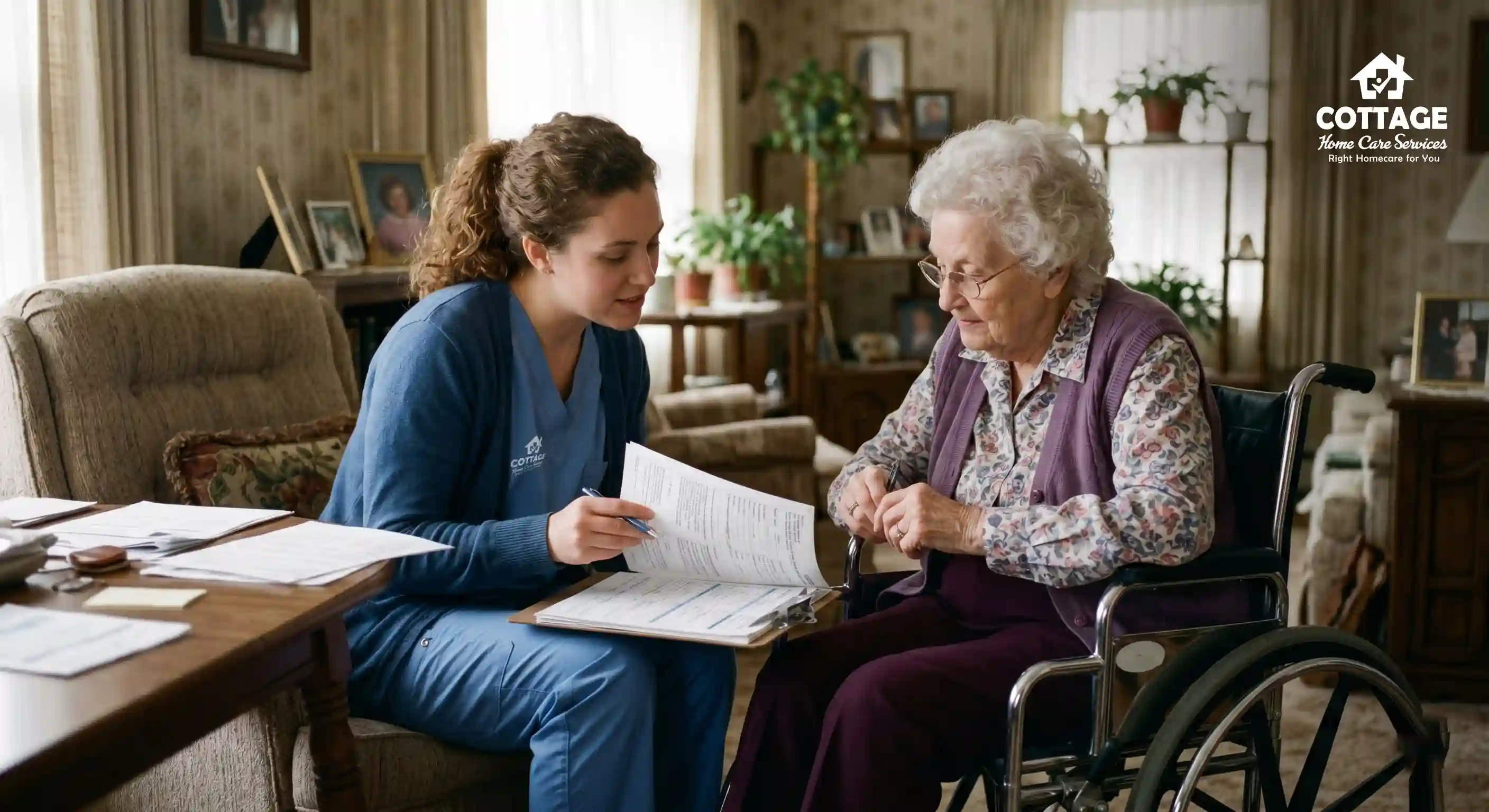
Wondering how to become a paid caregiver for a family member in CT? Connecticut has several possible paths, but there is no single caregiver paycheck or one application for everyone. Eligible families may use Adult Family Living (AFL), Community First Choice (CFC), a Medicaid waiver, or a VA program. The right choice depends on the person's care needs, coverage, age, living arrangements, and your relationship. This guide explains how to check eligibility, apply, and find help with the next step.
If your parent needs help with bathing, dressing, meals, or moving safely at home, start by checking their Medicaid status and care needs. If you want to be the paid caregiver, ask the program to confirm that your relationship is allowed before you expect payment.
Can You Get Paid to Care for a Family Member in Connecticut?
Yes. A qualifying adult child, other relative, or friend may be paid to care for a family member in Connecticut. The program must approve the person receiving care, the paid service, and the caregiver. Connecticut Medicaid programs are a common path; certain VA programs are another. Medicare alone does not pay a family member for ongoing personal care.
Which Route Fits Your Family?
Use this quick guide to find your first call. Program eligibility and the right to hire a family member are separate decisions.
| Your situation | Likely route | Payment type | First contact |
|---|
| You live with your relative, who qualifies for CHCPE or the PCA Waiver | Adult Family Living | Stipend via an AFL agency | DSS Community Options |
| Relative is 65+, at risk of nursing home care | CHCPE (check AFL service) | Home-care services; AFL stipend only if specifically approved | DSS, 800-445-5394 |
| Relative has HUSKY, needs institutional-level care | Community First Choice | Self-directed wages | DSS, or 2-1-1 |
| Relative is 18 to 64 with a qualifying disability | PCA Waiver | Self-directed wages | DSS or your AAA |
| Relative gets DDS services; you're a guardian or parent | DDS caregiver option | Pay as a Direct Support Professional | Your DDS case manager |
| Relative is a veteran or surviving spouse | VA pension, PCAFC, or VDC | Stipend, pension, or budget | CT VA office |
| None of these fit | Private care agreement | Negotiated pay | An elder law attorney |
Four Terms Families Mix Up
Keep these four words apart. Health coverage is Medicaid or other insurance. A program is what that coverage opens up, like CHCPE or the PCA Waiver. An approved service sits inside a program, like AFL or self-directed care. An approved caregiver is the person DSS or the VA has cleared to pay. Being related does not settle that last point.
CHCPE can fund different home-care services, while AFL is a live-in caregiving service available under qualifying programs. The PCA Waiver and CFC support self-direction. Approval for CHCPE does not by itself authorize payment to a relative.
Sources: Connecticut DSS, MyPlaceCT, DDS, VA Connecticut Healthcare System.
Who Can Become a Paid Family Caregiver, and What Help Can Be Approved?
To get paid to care for a family member in CT, two people must qualify. The person getting care must meet a program's rules. The caregiver must meet them too. Being related does not count as proof by itself.
Two Sets of Requirements
For the person getting care, programs check a few things. Do they live in Connecticut? Are they old enough or disabled enough? Do they have a proven need for daily help? For Medicaid routes, programs also check money and assets.
Caregiver rules depend on the service. You may need to be an adult, meet screening or training requirements, and complete the program's enrollment process. AFL also requires the caregiver and the person receiving care to share a home. Ask the case manager whether your specific relationship is allowed.
Relatives, Friends, Spouses, and Legal Roles
Most relatives and friends can become paid caregivers. This includes adult children, siblings, in-laws, other relatives, and close friends. It also includes unmarried partners who share a household. Spouses, parents of minor children, guardians, and conservators get treated differently. Each program sets its own rule for them, instead of one blanket yes or no.
Under Connecticut AFL, CFC, and the PCA Waiver, a legal spouse is generally excluded from the paid caregiver role. VA PCAFC follows different rules and can allow a qualifying veteran's spouse to receive a stipend. For relationship-specific details, see our Connecticut spouse caregiver guide.
What Counts as Approved Help
Approved personal care commonly includes help with bathing, dressing, eating, getting in and out of bed, and safe movement. Other tasks depend on the care plan. A family caregiver cannot assume that all household tasks or clinical services are paid. Ask which tasks and hours are actually authorized.
A diagnosis or an insurance card does not decide eligibility by itself. DSS or the VA still checks your relative's needs and your role before paying anyone.
Sources: DSS program definitions; MyPlaceCT assessment guidance.
How to Become a Paid Caregiver for a Family Member in CT
There is no single application to become a paid caregiver for a family member in CT. Start with the person who needs care. Check their coverage, request a needs assessment, and ask which approved service permits payment to a relative. Then complete caregiver enrollment before paid care begins.
- Choose the program and call the right office. For CHCPE or AFL, call DSS Community Options at 800-445-5394 (referrals: option 4). For CFC, use the Connecticut CFC application page or call 2-1-1, option 3. For DDS, contact the current case manager.
- Gather the basics before applying. Record the care recipient's age, Connecticut address, Medicaid or HUSKY status, daily care needs, existing case manager, and the relationship of the proposed caregiver. Keep private identification numbers out of general contact forms.
- Complete the care and financial review. DSS or the relevant program assesses care needs and, when required, income and assets. A provider may also need to confirm whether the caregiver lives in the same home.
- Enroll the caregiver and confirm payment terms. Complete any required training, screening, payroll forms, and agency steps. Ask for the approved care plan, payment type, who pays it, and the effective date in writing.
- Follow up and keep records. Save the application or case number, note who you spoke with, and provide missing documents quickly. For denials or delays, ask how to request a review or appeal under the specific program.
Not sure where to start? Cottage Home Care Connecticut can help you understand AFL eligibility and the next steps: (860) 263-0272. You can also see the Connecticut AFL service page.
Keep a short list of daily care tasks, proof of Connecticut address, insurance or HUSKY details, relevant medical or functional records, and any guardianship paperwork. The exact documents depend on the program. Ask DSS or your case manager which items are still missing.
Documents That May Help You Apply
Official starting points: DSS CHCPE referrals, DSS CFC applications, and DDS Paid Family Caregivers.
How Much Does a Family Caregiver Get Paid in Connecticut?
Caregiver pay in CT depends on the program, your relative's care level, and who handles the payment. There's no single rate that applies across the state.
Stipends, Wages, and Other Pay Types
Under Adult Family Living, DSS places your relative into one of four care levels. An AFL agency pays the caregiver a stipend set for that level. Ask the agency for its written pay schedule and any fees it deducts.
Under the PCA Waiver and Community First Choice, the Medicaid member may hire an eligible attendant, including certain relatives, within an authorized plan and program wage rules. You do not generally have to live together for these routes. A designated fiscal intermediary supports payroll and required tax reporting; confirm the current payroll provider with your case manager.
Under the DDS option, you get paid as a Direct Support Professional, at the rate set for that service.
VA programs work in different ways. PCAFC pays a monthly stipend. Veteran-Directed Care gives a flexible budget that can include hourly pay. A&A and Housebound add a pension amount the household can use however it chooses.
What Shapes the Final Amount
Four things matter: the care level, the services in your care plan, how often you get paid, and any deductions. Sharing a home, which AFL requires, does not turn into pay for 24 hours a day. The stipend reflects the care level, not the hours under one roof.
Payment terms and any contribution from the person receiving care depend on the exact program and eligibility category. State-funded CHCPE can involve a client contribution, while self-directed attendant work follows its own payroll rules. Ask for the current terms in writing before making a budget.
Before You Compare Providers, Ask
Get written answers. What does the care plan allow, and for how many hours? Which agency pays, and how often? Is it a stipend, a W-2 wage, or a VA benefit, and how is it taxed? Does income change what the family owes? What happens to pay during an illness?
Sources: DSS rate guidance; written terms from your assigned agency.
Can Adult Family Living Pay a Live-In Relative?
The Adult Family Living program in CT pays a relative or close friend who shares a home with an eligible older adult or adult with a disability. The caregiver gives daily care and gets a stipend through an authorized agency.
Sharing a Home
Either the caregiver moves in with the person getting care, or that person moves in with the caregiver. DSS does not require one direction over the other. The caregiver gives supervision and hands-on help. Behavioral support gets added when the care level calls for it. A spouse cannot be the paid AFL caregiver.
AFL Runs Through CHCPE or the PCA Waiver
AFL is not its own funding source. It is a service that sits inside two programs. One is CHCPE, generally for adults 65 and older. The other is the PCA Waiver, generally for adults 18 to 64 with a qualifying disability. Your relative must qualify for one of those first. Start with DSS Community Options, or call 2-1-1 for a referral.
Care Levels and Oversight
DSS sorts recipients into one of four care levels, based on need. Families then get matched with an AFL agency. That agency handles the stipend, gives training, and keeps up the oversight DSS requires.
For a focused explanation of living together, caregiver eligibility, oversight, and enrollment, visit Cottage's Adult Family Living (AFL) program page.
Sources: MyPlaceCT, Adult Family Living; Connecticut DSS.
Can CHCPE Help Pay a Family Caregiver in Connecticut?
CHCPE is open to CT residents who are 65 or older and at risk of nursing home placement. There are two paths into it: state-funded or Medicaid-funded. The path you take changes the money rules. It also changes which services can pay a family member.
State-Funded vs. Medicaid-Funded
CHCPE includes state-funded and Medicaid-funded eligibility categories. They use different financial rules, and available services are not the same for everyone. The state-funded option may have a client cost share. Confirm income, asset, spousal protection, and contribution rules with DSS rather than relying on figures from a past year.
| CHCPE Path | Eligibility Review | Family Caregiver Payment |
|---|
| State-funded CHCPE | DSS checks age, care needs, and state-funded financial rules; some participants have a required cost share. | Only if the specific authorized service permits a paid relative; do not assume ordinary CHCPE services do. |
| Medicaid-funded CHCPE | DSS checks Medicaid long-term-care financial and functional criteria. | AFL may permit an approved live-in relative or friend to receive a stipend. |
Financial limits change. Connecticut law has also changed the state-funded CHCPE cost-contribution percentage since older DSS fee guidance was posted. Ask the DSS Community Options Unit for the rules in effect for your category. You can review the Connecticut long-term-care statute and the DSS eligibility page.
One more detail worth knowing: DSS may ask a non-applying spouse to help pay toward the cost of care, and it can recover the cost of services from the care recipient's estate after they pass away. Ask DSS how this applies to your situation before you count on an inheritance plan staying untouched.
Services, Family Pay, and How to Apply
CHCPE covers care management, adult day health, homemaker help, meals, Adult Family Living, and agency Personal Care Attendant services. These do not all treat family caregivers the same way. Under CHCPE's standard Personal Care Attendant service, family members generally cannot get paid, with rare exceptions. AFL is different. It is the one CHCPE service built to pay a qualifying family member who shares a home with the person getting care.
Start a CHCPE referral through the DSS referral instructions, or call 800-445-5394 and select option 4. For complete CHCPE category and cost details, read Cottage's Connecticut Home Care Program for Elders guide. A referral starts the assessment; it is not approval to pay a caregiver.
Sources: Connecticut DSS, CHCPE referral instructions; Connecticut General Statutes, section 17b-342.
Getting Paid Through the PCA Waiver or Community First Choice
The PCA Waiver and Community First Choice (CFC) are separate Medicaid programs. Both let a person hire their own caregiver, including a family member, and pay a negotiated hourly wage through the state's fiscal intermediary. Under either one, the caregiver does not need to live in the same house as the person getting care. That rule only applies to AFL. The two programs still differ in rules and enrollment limits.
PCA Waiver: Eligibility, Pay, Application
The PCA Waiver generally serves adults 18 to 64 with a physical disability. DSS requires a demonstrated need for hands-on help with daily activities, like bathing, dressing, or transfers, or a qualifying cognitive impairment, plus Medicaid financial eligibility. One rule to know: a conservator cannot also be the paid PCA, or be related to the PCA. It is a waiver, so enrollment is limited and a wait can apply. One helpful detail: you can apply even if you are slightly over the income or asset limit. DSS only requires you to be within those limits once you are actually offered a service slot.
The caregiver's wage and hours must follow the approved PCA Waiver plan. Apply through DSS using the current procedure on the MyPlaceCT PCA Waiver page. The waiver has limited enrollment slots, so a wait may apply.
CFC: Eligibility, Pay, Application
CFC is a Medicaid State Plan option, not a waiver, so it has no enrollment cap. It is open to HUSKY members of any age who meet an institutional level of care. They must be able to self-direct, or have someone who can do it for them.
DSS checks care needs and authorizes covered services. The eligible person or representative can choose and direct an attendant under the program's rules. Apply using the official Connecticut CFC page. For help by phone, call 2-1-1, option 3, during posted hours.
Self-Direction and Payroll
In self-directed care, the approved participant or representative takes part in choosing, directing, and scheduling a personal care attendant. A designated fiscal intermediary processes eligible payroll. AFL is different: an authorized agency oversees the live-in arrangement and stipend.
Payroll contractors and program processes may change. Ask the assigned DSS or DDS care manager which organization handles your caregiver enrollment, time records, and payment.
Sources: Connecticut DSS; CGA 2026 fiscal intermediary materials; DDS RFP #33295.
How Does the DDS Paid Family Caregiver Program Work?
The DDS Paid Family Caregiver Program is a separate route from AFL or CHCPE. It is for families already connected to DDS. It does not add new funding. Instead, it changes who can deliver services a DDS participant already has.
A Separate Route for DDS Families
As of May 1, 2024, DDS lets two groups get paid for specific supports, like Respite and Personal Supports. Those groups are legal guardians of adults and parents of school-age children, and both were once excluded. Parents of minor children need one more step: an assessment that shows the arrangement is necessary.
Rules for Guardians and Parents
This doesn't create new DDS funding. It lets a guardian or parent deliver a service instead of an outside provider. The Employer of Record can't also be the paid caregiver. Hour caps apply, and pay covers only the person you support, not other household duties.
Ask Your DDS Case Manager
Ask your DDS case manager which authorized supports a parent or guardian may provide, which limits apply, and what enrollment steps are required. Cottage does not administer DDS waiver payments, so the DDS team is the source for a specific participant's existing support budget.
Source: Connecticut DDS, Paid Family Caregivers Information.
Which VA Benefits Can Help Pay for Family Care?
Four VA programs can help pay for family caregiving in Connecticut. This section is educational. Cottage does not administer VA benefits or file claims.
Program of Comprehensive Assistance for Family Caregivers (PCAFC)
The veteran and caregiver must apply together. A spouse, child, parent, stepfamily member, or extended family member may qualify without a rule that they live with the veteran. Someone who is not a relative may qualify if they live full time with the veteran or agree to do so if designated. The VA reviews both the veteran and the caregiver before approval.
An approved Primary Family Caregiver may receive a monthly stipend, training, respite support, and other benefits if eligible. The amount depends on VA rules and locality. Check the official PCAFC page for current eligibility and stipend information.
Veteran-Directed Care (VDC)
VDC runs in Connecticut through VA Connecticut Healthcare System and local Area Agencies on Aging, for veterans who need home care to avoid an institution. The veteran manages a flexible budget with a fiscal intermediary. That budget can pay a hired caregiver, including a relative, by the hour.
Aid and Attendance, and Housebound
Aid and Attendance (A&A) is a pension supplement for wartime veterans or surviving spouses who need help with daily activities. Housebound pays a similar amount to those largely confined home by a permanent disability. A household gets one or the other, not both.
Aid and Attendance and Housebound benefits are pension-related payments to the eligible veteran or surviving spouse. They are not a wage paid directly to a family caregiver. Benefit levels change, so use the current VA pension rate tables, not past-year estimates.
How to Apply
To request PCAFC, the veteran and caregiver can use VA Form 10-10CG through the VA caregiver program. For pension-related benefits, follow the current VA pension application instructions. Veteran-Directed Care generally starts through the veteran's VA care team. These are separate federal programs, not Connecticut Medicaid caregiver wages.
Sources: VA pension rate tables, effective Dec. 1, 2025; VA PCAFC page; 38 CFR 71.40.
Does Medicare Pay Family Caregivers, and What About Provider Offers?
Medicare does not pay a family member directly for ongoing personal care. It pays for doctor-ordered home health for someone who is homebound and needs skilled or intermittent care, a narrower role than general paid caregiving.
Home Health vs. Ongoing Personal Care
Medicare's home health benefit covers skilled nursing, therapy, and aide care paired with skilled care, through a certified agency. There is no set visit limit. Coverage can go on as long as your relative still qualifies. It can even support a condition that stays the same, or slows down, not just one that gets better. It is not a paid workweek for a relative. Coverage stops once skilled care is no longer needed.
Medicare pays the agency, not a relative. Some agencies hire and train a family member as a certified aide, paid as the agency's own worker. That is a job with the agency, not a Medicare benefit.
How to Check a Paid-Caregiver Offer in Connecticut
Before signing up with a company that says it can pay you to care for a relative, ask which Connecticut program funds the care, whether it is currently open in your area, whether your family relationship is allowed, and who handles written approval and payment. An offer aimed at another state is not proof of eligibility in Connecticut.
Sources: Medicare home health coverage pages; current public program pages for providers named here.
Is Family Caregiver Pay Taxable, and What Tax Benefits May Apply?
Whether caregiver pay is taxable depends on the program. Some pay is excluded from federal tax. Some is ordinary wages. This is general information, not tax advice.
Credits, Deductions, and Income
A tax credit reduces what you owe. A deduction reduces the income that gets taxed. Neither changes what caregiver income is for other purposes, like benefit eligibility.
Medicaid Waiver Payment Exclusion
IRS Notice 2014-7 may allow certain Medicaid waiver payments for a caregiver living with the care recipient to be excluded from federal gross income if all conditions are met. MyPlaceCT describes Connecticut AFL stipends as generally non-taxable. CFC or PCA Waiver payments are not automatically taxable or tax-free based only on the program name; facts such as the residence and payment arrangement matter. Check the IRS guidance and ask a tax professional.
Connecticut's New Caregiver Tax Credit
Connecticut enacted a new nonrefundable family caregiver tax credit for eligible out-of-pocket caregiving expenses beginning with the 2027 tax year. It does not provide caregiver wages and is not a credit for 2026 expenses. Eligibility, income limits, and required vouchers are described in Connecticut DRS 2026 tax developments.
Federal Child and Dependent Care Credit
The federal Child and Dependent Care Credit may help some working families who pay for qualifying dependent care. It is a tax credit for eligible expenses, not a paycheck for providing care to your own relative. Check current-year eligibility and limits with the IRS.
Other Dependents Credit, and Head of Household
Other possible tax benefits include the Credit for Other Dependents and, for eligible taxpayers, head-of-household filing status. Requirements depend on income, family relationship, household support, and where the person lives. Ask a tax preparer before assuming either applies.
Medical Expense Deductions
Some qualified medical expenses may be deductible when you itemize, subject to IRS rules. Save receipts and care records. Whether caregiver pay affects Medicaid, SSI, or other benefits is a separate question from whether that pay is taxable.
Sources: IRS, Medicaid waiver payments; Connecticut DRS, 2026 developments; MyPlaceCT, Adult Family Living.
What Other Financial Options Can Help Your Family?
A few other tools can ease caregiving costs, though none pay like AFL, CFC, or VA benefits do.
Long-term care insurance may cover family-provided care, depending on the policy. Get written confirmation from the insurer first.
Life insurance living benefits let a policyholder access part of the death benefit while living, under some conditions. Ask your insurer if your policy includes this.
Connecticut Paid Leave may replace part of an eligible employee's income for time away from work to care for a family member with a serious health condition. It is temporary leave support, not ongoing caregiver employment. Read the official CT Paid Leave family-care page for application rules and documentation.
Private care agreements let a family pay a relative directly, outside any state program. A written agreement, ideally drafted with an elder law attorney, should spell out services, pay, and records. If Medicaid may be needed later, have the agreement reviewed first. Payments made without a proper agreement can sometimes count as disqualifying gifts during Medicaid's look-back review.
The child caregiver exemption is a federal Medicaid rule. It lets an adult child who lived with and documented care for a parent receive a home transfer without a Medicaid penalty, under specific conditions. It is not a form of pay. Use an elder law attorney familiar with CT's rules.
Sources: USAGov; CT Paid Leave; your insurer; a Connecticut elder law attorney.
Where Can Connecticut Families Get Support and Ongoing Help?
Paid programs are only part of the picture. A network of resources helps with training, respite, and referrals, paid or not.
AARP's 2023 “Valuing the Invaluable” update estimated 420,000 family caregivers in Connecticut. Together, they gave about 390 million hours of unpaid care in a year, valued near $7.2 billion. That figure measures unpaid labor for policy purposes. It is not available compensation.
The federally funded National Family Caregiver Support Program offers unpaid caregivers respite, training, and cost help, through your local Area Agency on Aging. Availability varies by region.
| Resource | What it helps with |
|---|
| Area Agencies on Aging | Referrals, training, and respite. Find yours via the Eldercare Locator. |
| CT Aging and Disability Resource Centers | Info for older adults and caregivers: 800-994-9422 |
| Connecticut DSS | Runs CHCPE, the PCA Waiver, and CFC |
| MyPlaceCT.org | A DSS portal that links families to services |
Other support may include condition-specific nonprofit resources, local respite programs, or help from a hospital discharge planner. These services may reduce care costs but are not the same as an approved family caregiver wage or stipend.
A few questions are worth asking before you rely on any one arrangement. What happens if you get sick? How do you request a reassessment? How do you change agencies? Is language help on hand? MyPlaceCT offers many languages. DSS materials commonly come in English and Spanish.
Sources: AARP, Valuing the Invaluable, 2023 update; MyPlaceCT; Connecticut DSS; Administration for Community Living.
Frequently Asked Questions About Paid Family Caregiving
Can I get paid to care for my mother or father in Connecticut?+
Possibly. If your parent qualifies, Adult Family Living may support an approved live-in family caregiver. Community First Choice or the PCA Waiver may also allow an eligible relative to provide approved care. Start by asking DSS which program fits your parent.
How do I become a paid caregiver for a family member in CT?+
Check the care recipient's Medicaid or other coverage, contact the correct state program, complete the care assessment, and confirm that you can be the paid caregiver. Finish required enrollment and get the approved start date in writing before counting on pay.
Do I have to live with my family member to get paid?+
For Adult Family Living, yes: the caregiver and the person receiving care share a home. Self-directed care through Community First Choice or the PCA Waiver generally does not require living together.
Can a spouse be paid to care for a husband or wife in CT?+
AFL, CFC, and the PCA Waiver generally do not allow a legal spouse to be the paid caregiver. VA PCAFC may pay an eligible veteran's spouse through a different federal program. Check the rules for the exact program.
Do I need Medicaid to get paid as a family caregiver in Connecticut?+
Medicaid is required for many Connecticut paid personal-care routes, such as CFC and Medicaid-funded waiver services. VA caregiver benefits and private care agreements have different rules. Medicare alone does not pay family members for ongoing nonmedical personal care.
Does CHCPE automatically pay an adult child caregiver?+
No. CHCPE can cover different services, but approval for the program does not automatically make a relative a paid caregiver. Ask whether Adult Family Living or another approved family-caregiver service fits the case.
Do I need a CNA certificate to care for a relative?+
Not every family-caregiver program requires a CNA certificate. Requirements vary by the program, the approved tasks, and whether you work as an agency employee or a self-directed attendant. Confirm training and screening with the program.
How much do family caregivers get paid in CT?+
There is no one statewide amount. AFL uses a stipend tied to assessed care needs; self-directed care programs pay according to approved hours and wage rules. Ask the responsible agency for current written pay terms.
Can I keep another job while caring for a relative?+
Maybe. Some self-directed attendants can work elsewhere as long as they meet the approved care schedule. AFL requires a live-in caregiving arrangement. Check the actual service plan and provider rules.
Can two siblings share paid caregiving duties?+
Some programs may approve more than one caregiver, depending on the service plan and enrollment rules. Ask the case manager before dividing hours or assuming both caregivers can be paid.
Can I get back pay for caregiving I did before approval?+
Do not assume earlier unpaid care will be reimbursed. Ask the specific program about its effective date and any exceptions. Keep the approval letter and ask which hours may be recorded for payment.
What if my Connecticut caregiver application is delayed or denied?+
Keep your case number, request the missing-document list, and ask for a written decision and review or appeal instructions. Follow up with DSS, DDS, or the VA agency handling your specific program.
Talk With Cottage About Your Family's Next Step
If you want to become a paid family caregiver in Connecticut, Cottage Home Care can help you check whether Adult Family Living might fit your family and understand the next program steps. Call the Connecticut team at (860) 263-0272. Medicaid, DDS, and VA program decisions remain with the agencies that administer them.
A few things help the conversation go faster. Where in Connecticut does your relative live? About how old are they, and what coverage do they have? What daily help do they need now? Are any services already in place? Who in the family is thinking about becoming the paid caregiver?

 Alex TullaoRegistered Nurse